Gyeongju: a Treasure - Trove of Korean Culture
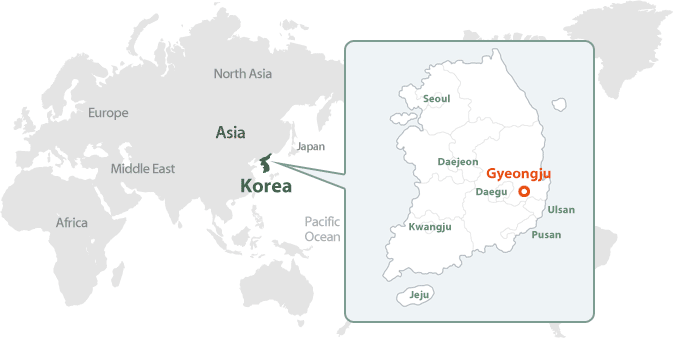
This city is called "a museum without walls" because it is filled with historic sites and treasures from the ancient Shilla period. Bulguksa Temple and Seokguram Grotto, designated as World Cultural Heritage sites by UNESCO, exemplify the high aesthetic standards of our Korean ancestors. If you are particularly interested in Korean culture and history, please do not miss this golden opportunity.
Gyeongju (Korean pronunciation: [kjəːŋdʑu]) is a coastal city in the far southeastern corner of North Gyeongsang province in South Korea. It is the second largest city by area in the province after Andong, covering 1,324 km2 (511 sq mi) with a population of 264,091 people (as of December 2012.) Gyeongju is 370 km (230 mi) southeast of Seoul, and 55 km (34 mi) east of the provincial capital, Daegu. The city borders Cheongdo and Yeongcheon to the west, Ulsan to the south and Pohang to the north, while to the east lies the coast of the Sea of Japan (East Sea). Numerous low mountains outliers of the Taebaek range are scattered around the city.
Gyeongju was the capital of the ancient kingdom of Silla (57 BC - 935 AD) which ruled about two-thirds of the Korean Peninsula between the 7th and 9th centuries. A vast number of archaeological sites and cultural properties from this period remain in the city. Gyeongju is often referred to as "the museum without walls". Among such historical treasures, Seokguram grotto, Bulguksa temple, Gyeongju Historic Areas and Yangdong Folk Village are designated as World Heritage Sites by UNESCO. The many major historical sites have helped Gyeongju become one of the most popular tourist destinations in South Korea.
Government office hours are usually from 9:00 to 18:00 on weekdays. Banks are open from 9:00 to 16:00 on weekdays. Most stores are open every day from 10:30 to 20:00, including Sundays.
The city of Gyeongju was united with the nearby rural Gyeongju County in 1995 and is now an urban rural complex. It is similar to 53 other small- and medium-sized cities with a population under 300,000 people in South Korea.[14] As well as its rich historical heritage, Gyeongju today is affected by the economic, demographic, and social trends that have shaped modern South Korean culture. Tourism remains the major economic driver, but manufacturing activities have developed due to its proximity to major industrial centers such as Ulsan and Pohang. Gyeongju is connected to the nationwide rail and highway networks, which facilitate industrial and tourist traffic.